Thanksgiving is my favorite holiday of the year. This American dose of culture should truly be exported to the rest of the world. Not only is the meaning of Thanksgiving a noble one, but the fact that it brings families together for a day or two makes it that much more special.
Showing posts with label The Good Life. Show all posts
Showing posts with label The Good Life. Show all posts
Tuesday, November 22, 2011


Sunday, June 5, 2011
The Russian Fat Loss Secret: Guest Post
A couple of months ago I met Jose on a trip to Honduras and we are now good friends. Jose is General Manager of a well-known hotel chain in Atlanta and, like me, he loves to travel and see all the world has to offer. As we smoked cigars and enjoyed the beautiful country of Honduras, Jose shared his biggest fear with me. Approaching 50 years of age, Jose is 50lbs over weight and struggles with his energy levels. Like many over weight people, what frustrated Jose most was the lack of understanding why, after years of being in decent shape, his body was now giving way to love handles, a gut and a feeling of labor just to get up in the morning.
Friday, April 29, 2011
A Walk On The Nomad Side
Monday, March 14, 2011
The Most Interesting Interview In The World: Guest Post
I spent a wonderful weekend in Washington DC. You can say what you want about the type of creatures that lurk in those waters (politicians, lobbyists, special interests, POTUS...) but that city is first class. From the hip cafes of Capital Hill to the cobble stones of Georgetown, Washington DC is a romantic city calling for the kind of attention reserved only for a special someone.
Sunday, November 7, 2010
The Importance of Keeping Your Head Empty
This week I had the privilege of attending a private dinner with Elizabeth Gilbert, best selling author of the book Eat, Pray, Love. Now before you say 'huh?' let me just say I haven't read the book or watched the movie, but am aware it is a "chick flick" and that didn't prevent me from attending. You see, I find authors to have interesting perspective on the world and have often found their views helpful to me personally and in my work. I was not disappointed by Ms Gilbert.
Friday, October 29, 2010
Friday Afternoon Musings From Boston
What I love about travel is that it not only gives you time to reflect on your life, but also it enhances your sense of observation. You really see things that normally you wouldn't. Things that perhaps are better unseen. And you appreciate the complexities, challenges and obstacles that life sometimes throws at you. If there is one thing I love about being a nomad its the opportunity to reflect and observe things that you normally wouldn't in your day to day life.
Tuesday, October 12, 2010
Killing Me Softly
I was scanning through articles like I do every day and came across a very disturbing piece in the UK's Daily Mail today. A Manhattan-based artist named Sally Davies bought a Happy Meal from McDonald's on April 10th and photographed it on her shelf in her apartment. She proceeded to photograph the happy meal every day in order to capture the daily decay, a kind of 'art' project I guess. The only trouble was 6 months later the Happy Meal has barely decayed. It looks almost like it did on the day she bought it.
Monday, August 23, 2010
The Missing Element Of Success: Taking Care of Your Body
The past few weeks I have been putting together the contents for a blog on the importance of personal training and why its imperative for leaders, managers, professionals and individuals young and old to focus on their physical, nutritional and mental health. The basic message is you must incorporate taking care of your body into your day-to-day life. If you want to be successful at your profession and with your family then you have to workout and eat the right foods. However as life happens I wanted to share an experience from this evening that in my view reinforces the absolute need for all of us to exercise, build strength and eat the right foods.
Monday, May 31, 2010
Dress The Part
"Dress shabbily, they notice the dress. Dress impeccably, they notice the woman."
--Gabrielle "Coco" Chanel, French fashion designer
Sunday, February 28, 2010
5 Travel Lessons You Can Use at Home
If there is one thing I hope the
Nomad Influencer achieves its this: to encourage you, the reader, take the
experiences a nomad lifestyle can give you and apply it in your everyday life.
It doesn’t matter what kind of a life you lead today, whether you have a family
and the responsibilities that go with that, how old you are or how limited (or
not) you may be economically. Life is about what you do with your time and that
means choices. And that is the message Rolf Potts, the author of Vagabonding,
gives in his post on Tim Ferriss’ blog this week. It’s a wonderful read based on the experiences of a true
nomad who has 5 amazing lessons about the art of travel well worth adopting in
your everyday life. I hope you enjoy it and share your thoughts.
Wednesday, January 6, 2010
What the Heck Happened to British Airways?
I
just completed 3 days of straight travel, originating in Brussels, flying
through Munich, Philadelphia, Pittsburgh, Washington DC, London and back to
Edinburgh. It has been several years since I was flying British Airways
regularly to and from the US. It was the highlight of my travels, experiencing
BA’s wonderful customer service both on the plane and in the terminal lounges.
As a Gold card member of their much coveted frequent flyer program, you got
extra special service everywhere you went with British Airways. Everything
about the experience set them apart from the competition, especially the poorly
managed US airlines that have absolutely no customer service. Quality food,
drinks, amenities, and most of all first rate customer service where staff
actually took the time to look at your boarding card and address you by your
name. And for this differentiated experience, we the road-warriors of travel
were happy to pay a slight premium (2-5% on average) to fly British Airways.
Tuesday, January 5, 2010
In 2010 Go Seek And Venture
Harvard
Business Review’s August issue focused on managing in the ‘New World’, a title
for the post-recession world where Government Regulation, Risk, the ‘New’
Economy and Leadership will differ.
Tuesday, December 8, 2009
Nomadic Experiences Today
A big part of being a Nomad is experiencing things you normally wouldn’t if you stay in one place. And to really appreciate this you need to have a mindset of living in the ‘Present’, otherwise you just don’t “catch” the wonderful things happening around you every day. Now that may sound ‘obvious’, but the reality is most people – no strike that – the majority of people don’t live in the present. In fact most people spend the majority of their time living in the future, or God forbid, the past. Now there is nothing wrong with focusing your efforts on attaining goals and objectives that are ahead of you, and there is certainly something healthy about remembering and appreciating your past. But if you fail to be aware of your present then you will miss out on the many simple pleasures life gifts you everyday. And as a Nomad, I am even more blessed to experience some amazing things on my travels.
Friday, November 27, 2009
A Thanksgiving Toast: Here is to Uncertainty!
As I spent my first Thanksgiving abroad in 5 years, I couldn't but help to feel homesick, lonely and missing out on what is arguably the best US holiday in the annual calendar. There have been many blogs and articles about what Thanksgiving is, its origins, and how Americans come together in a very special way during this last Thursday of every November, so I won't bore you with another version. However, I did want to share with you a wonderful piece from the New York Times that my cousin Ric sent me. It captures the Thanksgiving spirit but also brings to light some of the discussions we have been having recently on the 6 Basic Human Needs, particularly the need for uncertainty (which some of you are still resisting based on your e-mails to me!).
So thank you Uncle Ric for sharing this piece with me and thinking of me as you all sat around the table in Orange County this Thanksgiving. I wish I was there with you! Happy Thanksgiving to all and lets raise a glass to what the future will bring, unbeknownst to you and me...
Published November 25, 2009
EDITORIAL
A Thanksgiving Toast
Sitting down with friends and family today, there will be thanks for the steady currents, flowing out of the past, that have brought us to this table. There will be thanks for the present union and reunion of us all. And there will be prayerful thanks for the future. But it’s worth raising a glass (or suspending a forkful for those of you who’ve gotten ahead of the toast) to be thankful for the unexpected, for all the ways that life interrupts and renews itself without warning.
What would our lives look like if they held only what we’d planned? Where would our wisdom or patience — or our hope — come from? How could we account for these new faces at the Thanksgiving table or for the faces we’re missing this holiday, missing perhaps now all these years?
It will never cease to surprise how the condition of being human means we cannot foretell with any accuracy what next Thanksgiving will bring. We can hope and imagine, and we can fear. But when next Thanksgiving rolls around, we’ll have to take account again, as we do today, of how the unexpected has shaped our lives. That will mean accounting for how it has enriched us, blessed us, with suffering as much as with joy.
That, perhaps, is what all this plenty is for, as you look down the table, to gather up the past and celebrate the present and open us to the future.
There is the short-term future, when there will be room for seconds. Then there is the longer term, a time for blossoming and ripening, for new friends, new family, new love, new hope. Most of what life contains comes to us unexpectedly after all. It is our job to welcome it and give it meaning. So let us toast what we cannot know and could not have guessed, and to the unexpected ways our lives will merge in Thanksgivings to come.
Monday, November 16, 2009
Russians Play Chess, the West are Playing Monopoly
One of the perks of being a Nomad is you get to
meet interesting and diverse people everywhere you go, and hear and see what they
think about current events which offer a different point of view. We may not
realize it, but we are in the midst of some huge shifts in world politics
and geo-dominance. The world is changing around us at a speed never before
seen. I like to stop sometimes and ask people from different backgrounds what
they think of things that are happening in the US and the West in general, that
impact all of us. The responses are always insightful and give food for thought,
given we in the West don’t always think through the consequences of our actions,
policies and sometimes in-action, to the rest of the world. This is both
irresponsible and dangerous given we have created a global economy that we have
been the engine to for over half a century.
This weekend I had brunch with a senior Russian
diplomat in Brussels. It was a social affair and given I didn’t ask his
permission to blog about our conversation he shall remain nameless. The discussion
was very interesting and it was a breath of fresh air to hear about how things
have evolved in Russia and the former Soviet states, as well as to learn about
the continued challenges the region and its people face. And in case you were
wondering there was no vodka involved, just good tea. But what was really
intriguing was when I asked the question ‘What
do Russians think about President Obama and his Administration?’
Monday, November 9, 2009
The Choice of Giving
I was reminded this weekend about one of the
greatest attributes of Americans. Americans give more to charities, causes, aid
and relief, and non-profits than any other nation in the world. The statistics
on this fact are mind boggling, and moreover this high level of giving has been
going on for over 60 years. But what makes Americans stand out when it comes to
their generosity?
This weekend I was back in Pittsburgh for a
number of events that included the wedding of two close friends and the 10th
Anniversary of the non-profit organization I am on the Board of, The Coro Center for Civic Leadership. I also attended
a dinner hosted by the McGuire Memorial, a non-profit organization in the
Pittsburgh area that I was not familiar with but is well known for its annual
golf outing hosted by ex-NFL star Tony Dorsett, quite an event in the
Pittsburgh social calendar for the past 15 years. Both the Coro event and the
McGuire Memorial dinner really highlighted America’s obsession with helping
others who are in need. You can find more information about Coro and the
McGuire Memorial Foundation at these links www.coro.org
and www.mcguirememorial.org.
What is interesting about America’s culture of
generosity is that it is primarily driven by its people not its government.
This is a stark difference to the majority of other nations in the world who
tend to ‘budget’ for aid and assistance through government organizations. In
fact, until ex-President George W. Bush’s second term in office, the US
government had one of the lowest rates of aid and assistance records in
history. U2 lead singer Bono spearheaded the effort to convince President Bush
to change this track record and much to his credit he did. The US government is
now one of the largest donors of aid and assistance to the world since 2005
thanks to the work of Bush and Bono. However, no other nation in history has
given so much to charities, non-profits and the like than the American people.
Why is that?
My firm belief is that it comes down to the
freedom to choose to give, supported by a culture of creating wealth and
abundance. American people are free to choose to give to any cause they wish,
and it is this freedom that drives up the scale of giving. Americans have
enjoyed relatively low taxes for the past 25 years, and this policy of low
taxes and creation of wealth has left many Americans in a position to give. And
give they do. Here are some key stats from the National Philanthropic Trust to
ponder:
· - 89
percent of households give
· - The
average annual contribution for contributors is $1,620.
· - According
to Giving USA, American giving reach a record high in 2007, with donations
totaling $314-billion. Giving has
since dropped by 2% to $308 billion in 2008.
- Charitable
giving accounted for 2.2% of gross domestic product.
· - Historically,
charitable giving rises about one-third as fast as the stock market.
· - 86
percent of wealthy donors said they are most motivated to give by the notion of
"meeting critical needs" and 83 percent said "giving back to
society" is motivational.
It is this freedom to choose to give that is the
key driver behind American generosity. This is very different to many other
nations and cultures where giving is a social obligation taught at very young
ages, no different than paying taxes or bills. Americans give because they want
to, not because they have to, and it is this important nuance that is behind
this massive scale of giving.
Sister Mary Thaddeus Markelewicz is the Executive
Director of the McGuire Memorial in Western Pennsylvania, and runs a 500-person
organization just like a CEO runs a company. Her track record over 21 years of
transforming a small non-profit into the magical place that McGuire Memorial is
today is frankly remarkable. Sister Thaddeus, as she likes to be referred to,
told us a story at Sunday night’s dinner that I think captures the spirit of
America’s giving culture. The story goes something like this: one day a man
meets God and asks what is the difference between Heaven and Hell, Lord?
The Lord shows the man to two doors. He opens the first and motions the man inside. The man sees a room with a big round table. The table has a big
pot of delicious smelling stew in the middle. There are a dozen people sitting
around the table and they are physically disabled, having short arms and
looking very very gaunt and unhealthy. They have long wooden spoons and try to
feed themselves the delicious stew but their arms are too short for the long
spoons and hence why they look so gaunt and in poor health. The man is very
distressed by what he has seen, and the Lord says this is Hell. The man then
steps into the second room and the setting is much the same, a big round table,
a big bowl of delicious smelling stew and a dozen physically disabled people
sitting around the table. But this time the people look very healthy and happy,
smiling and laughing with each other unlike the other room. They have the same
long wooden spoons and short arms, but it is a very different picture from the
previous room. The man steps out and the Lord says this is Heaven. The man says
‘I don’t get it’. The Lord responds that in the first room the people are so
preoccupied with feeding themselves that most of the food is wasted because of
their short arms and long spoons, resulting in the ‘hell’ we see. But in the
other room, the people have focused on feeding each other, using the long
spoons to help and care for each other, hence well fed and healthy,
resulting in ‘heaven’.
I think the story speaks for itself. Choosing to
give is a powerful thing. And giving is not just about your wallet, it can be
your time and your intellectual property. Many non-profit organizations need
the help experienced people can bring to help them achieve their goals. A few
years ago I decided I wanted to give back and chose to focus on three areas –
Leadership, Education and Foreign Affairs. They are personal areas of interest.
Serving on the Board of Coro fills my Leadership box, I am still looking for
the right opportunities to give back in Education and Foreign Affairs. If you
have any ideas please give me a call or drop me an e-mail. The goal is to make
a difference and with Coro I know we are making a difference. Coro Alumni have
gone on to do great things, and there are many examples of these given over
1000 young leaders graduate from the various Coro programs in across the US
each year. But the key to me is that I chose to help Coro and that has made all
the difference.
Sunday, October 25, 2009
A British Prime Minister, NFL and a Nomad
Sunday morning and I’m at Edinburgh Airport
waiting for a flight to London Heathrow. I have business meetings early Monday
morning so decided to spend my Sunday doing a bit of shopping and catching up
with some old friends. The BMI flight is over an hour late from London so we
are delayed. My Star Alliance Gold status gets me access to their lounge and I
am enjoying Scottish short bread with Starbucks quality coffee for breakfast.
Finally they call boarding and as I make my way to the gate I am met by a flood
of Scottish NFL fans wearing jerseys from all around the League. Philadelphia
Eagles, San Francisco 49ers, New York Giants, New Orleans Saints, Arizona
Cardinals, and of course Tampa Bay Buccaneers and New England Patriots.
You see, Tom Brady, Bill Belichick and the rest
of the New England Patriots are in London this weekend to play the Tampa Bay
Bucs in week 6 of the NFL regular season. The annual NFL game at Wembley Stadium
is the highlight of the British American Football calendar, with Wembley
selling out to a capacity crowd of 85,000. London has made a bid to host a
Super Bowl in the next 10 years and the NFL are taking a serious look at the
proposal. Most Americans may cringe at the thought of their national event
going to London, but it makes a lot of sense from a marketing and revenue
perspective. In fact, there is even a proposal to expand the league with a full
team in London. No doubt the logistics of having one or even two teams in
different time zones is a nightmare. Think about the physical toll it would
take on teams having to travel to the UK to play, and what about the London
team itself having to travel to places like San Francisco, Seattle or San Diego
to play a regular season or playoff game? Still, expanding its market to
include the UK population would be greeted with approval (and cash) from the
likes of Pepsi, Reebok and Gatorade.
And so as I watch these die hard American
Football fans standing in line at a remote airport in the North of the UK, with
their jerseys and baseball caps, spending their hard earned money to fly down
to London and no doubt take Monday off work (productivity hit?), I think I have
seen it all…until I board the plane. As I made my way through the first class
cabin I come face to face with Prime Minister Gordon Brown as he takes his seat
in the first row. Dressed in suit and tie, Gordon looks very tired as he
settles into his seat and immediately goes head down to read through a 3-inch
stack of paper. He looks like a management consultant, over worked, ruffled
hair, and aging by the minute. I was a bit taken aback to be honest, by his
shriveled look. He was also unshaven which was very unusual for a Prime
Minister, but then it is Sunday morning and Gordon was no doubt up in Edinburgh
for an engagement with family and friends the night before given the British
Prime Minister is in fact Scottish. We can forgive him his appearance this fine
fall morning, he is after all human like the rest of us, and deserves a weekend
‘off’ with his family who likely don’t get to have a Saturday night with him
all that often.
After my surprise of bumping into ‘the man’ (at
least in these parts), my business mind took over and I quickly started to
assess the Prime Minister’s entourage. He sat in seat 1A and his security man
sat next to him in seat 1C, wearing a suit and tie, looking fresh and rested,
with an ear piece and armed no doubt although you couldn’t see anything. Behind
him were two more men in suit and tie, but their facial expression and body
language suggested they are aides to the Prime Minister, not security. As I
waited for the NFL fans to stow away their bags and take their seats (this lot
don’t travel much I deduct), I turned my attention back to Gordon and there he
was, head down, scribbling ferociously on his stack of papers like a teacher
correcting term papers. And then it hit me! I looked up in the overhead
compartment and saw two briefcases staring back at me. Could it be? Was I
looking at the British Prime Minister’s equivalent to what we Americans call
‘The Nuclear Football’? Way cool…
As I took my seat (9D, exit row in economy, best
seats in the house), I couldn’t help to marvel at British society. The Prime
Minister is on a commercial flight and everyone around me is so relaxed that I
realize the only guy who is excited is me. I talk to my neighbor in 9F and
turns out he is a St. Louis Ram’s fan (really??) who masquerades as a banker
during the week. My new friend tells me the Prime Minister is often on this
flight to and from London and always travels commercial. What? He never takes
his own plane? Turns out he doesn’t have one. The Royal Air Force only give him
a plane for big international flights when he has a huge entourage, otherwise
he takes whatever commercial flight is available. “Tax payers won’t pay for
private jets,” my neighbor tells me. “They are in government to work for us,
not the other way round,” before turning the conversation back to more
important things, such as will the Rams fire QB Marc Bulger any time soon?
Now can you imagine politicians and leaders in
the United States flying commercial? Would the President take a commercial
flight from his hometown of Chicago back to DC? Better yet, can you see the
Speaker of the House fly commercial from San Francisco each week? What about Senator
John McCain? And if they did, how would people react? Would they be as civil as
the British are by politely leaving them alone? My flight was full but not a
single person interrupted Gordon as they boarded the plane. That would never happen
in the US.
You see, politicians in America have become
celebrities. Somewhere along the line the tables have turned on we, the people.
It used to be it was an honor to serve us by running for office. You went to
Washington to get things done for your constituents. And you had to be
qualified to represent the people who were sending you, so that meant you
actually had to have accomplished something in your life in order for people to
have confidence in your ability to serve. The British are fighting hard to keep
that tradition. Career politicians are being targeted by the Press to prevent
them from winning elections, or in cases where they snuck into office, from
being re-elected. If you have paid any attention to the British news the past
several weeks, auditors have been reviewing politician’s expense reports and making
them payback illegitimate expenses. Gordon had to payback over £12,000
($19,500). People are just not putting up with politicians who don’t know their
place. They don’t care who you are.
And so as we prepare to land at London’s Heathrow
Airport and I sign off, it is the nomad in me that is satisfied today. For
without venturing out in the world you can’t be at places like this…places
where Prime Ministers, foreign NFL fans and a nomad come together for a short
plane ride.
Tuesday, October 20, 2009
If a Homeless Man has a Dog, is the Dog Homeless?

Walking the streets of Edinburgh over the weekend, I came across a number of homeless dogs. Or at least that is how I perceived them as I strolled down George Street on a chilly Saturday afternoon, and saw a variety of breeds lying under blankets with their homeless owners asking me for my spare change. Having owned three labradors some years ago, I am one of many dog lovers who has experienced the joys (and frustrations) of raising puppies and watching them become grown best friends. My labs were incredible friends, loyal, caring and each of them having their own unique personality and character. As I recalled my three four-legged friends from days gone by, I got to thinking whether a dog would agree with my view that in fact he is homeless. What would the dog think?
per⋅spec⋅tive
–noun
the state of one's ideas, the facts known to one, etc., in having a meaningful interrelationship: You have to live here a few years to see local conditions in perspective.
Do you remember the first time you truly grasped the concept of perspective? It was like the fog clearing for me. I was in business school (that late believe it or not) and my Professor was unfortunately not very good, a fact that is supported by the sad truth that I can't remember her name. While she was not very good compared to some of her more impressive peers, for one lesson she did fascinate us with the importance of using perspective as a powerful tool in our day-to-day business dealings. She taught us the importance of understanding others' perspective in order to get across our own. She took the time to ensure we grasped the notion that understanding does not mean agreeing, but by understanding we have a better shot of connecting.
Some of you may be wondering why it took me until business school to grasp this simple concept, but think about it. When are we ever taught about perspective? They don't teach it at school, in religion or in sports and extra curricular activities. If anything, we are taught belief systems that are meant to define who we are, who we hang with, how we roll...dig deeper into society and you will see my point: gangs don't teach their members to understand the perspective of rival gangs; businesses don't teach their employees to learn from the opposing communication and positioning of competitors; political parties focus more on ridiculing the opposition during campaigning than understanding in the hope of connecting with opposing party members and, more importantly, voters; communities focus on, well, the community, and leverage things like local sports teams, the arts and festivals to bring people together. And so on. No, everywhere I look its clear the world tries to bring people together by focusing on what we have in common as opposed to share what is unique about each and every one of us.
With that perspective, I would argue I was lucky to learn about perspective so early in my life. Most people only grasp the notion when they are older, way older.
Perspective. Okay, so what?
Let us look at why it is so important to understand the power of perspective and then apply it in our world. Let me share an interesting example.
Some years ago I was involved with a client who had authored an incredible business book on managing diverse cultures. This client is a renowned consultant who earns his living by helping companies better understand other cultures in order to better manage their international business and teams. He has trained thousands of employees of Fortune 2000 companies all over the world in the art of managing cultural differences. My client told me a story about the challenges he encountered when one of his clients, a very large South Korean conglomerate, loved his training and his book so much that they translated it into Korean and distributed 30,000 copies in their organization without his permission. In short, they ripped off his book and distributed it to their staff (this is one perspective).
What happened next is truly remarkable. My client at first was enraged and got on the phone to his attorneys who, smelling deep pockets, wanted to sue international copyright infringement. The aggressive call to arms of the attorneys quickly reminded my client of his area of expertise - cultural differences. Instead of looking at this infringement of his intellectual property from his perspective, he decided to look at it from their perspective. He quickly realized that the South Koreans were in fact honoring him by paying to translate his work and then handing it out to 30,000 staff – they were so taken by his work that they went to all this effort and expense. After all, his book was not available in the South Korean language, or any Asian language for that matter. Reflecting on this further, my client came up with a proposal. He contacted his client and asked for a meeting. He flew to Seoul and sat with the clients to discuss his book. The conversation went something like this:
"Dear Korean client, you have bestowed the highest honor on me by investing your resources in translating my book and gifting it to so many of your hard working employees. I am very humbled and honored to help them and you with your business. Because my book is copyrighted internationally and I don't have a publisher in South Korea yet, would you be interested in helping me publish my book in your country?"
The South Korean conglomerate happened to own several publishing houses and jumped on the opportunity to buy the rights to his book, not only in South Korea but also China, Mongolia, Nepal and Japan. My client sold several million copies of his book over the next few years in the region and profited from his relationship with the big conglomerate. This does not make the fact that the company had infringed on his copyright and illegally translated and distributed copies without his permission okay, but by taking the time to understand their perspective and where they were coming from, he was able to think through a better outcome. Had he chosen to sue the company he would have been well within his rights, but I'm not sure anyone would have truly won from that scenario. A little understanding went a very long way in this instance.
Back to the Dag…"You like Dags?"
The opportunity to see from another perspective and then form an understanding is all around us every day. The world has changed in an irreversible way at least 3 times in the last 10 years by my count:
2001 – 9/11
2008 – Global Financial melt down
2009 – Barack Obama elected US President
Now everyone will have a perspective on whether these 3 events are irreversible changes, whether there are more than just these 3 events that truly have changed the world, whether they are positive or negative, who is to blame, who is right and who is wrong, whether they have impacted us at all etc. Regardless of how you view it, we are in need of greater understanding and connection today than ever before. Whether it is with our bankers, our public servants, our customers, our friends or other countries and faiths, we lack the perspective that is needed to ensure greater understanding and connection in our world today.
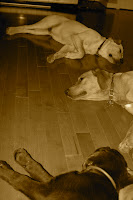
As for the homeless mutts…well, the truth is those dogs are happy animals. They get to spend all their time with their master, the person they want to be with the most. And they help these homeless people in ways no charity or pocket change can, by being loyal friends who love and respect them no matter what. It’s a heck of a relationship and I’m not sure they would give it up for anything in the world. But then that’s just my new perspective.
Maui, TJ & Asia - Aug 2005
Subscribe to:
Posts (Atom)
Subscribe To Nomad Influencer


 Posts
All Comments